
Theatre Reviews
We love producing shows but we also love watching them
AMATEUR THEATRE REVIEW: Shakespeare In Love – Bebington Dramatic Society, Bebington
AMATEUR THEATRE REVIEW: Shakespeare In Love – Bebington Dramatic Society, Bebington
The stage adaptation of Shakespeare in Love, based on the screenplay by Marc Norman and Tom Stoppard and adapted for the stage by Lee Hall, was brought vividly to life at the Gladstone Theatre on the evening of 6th March. Blending romance, comedy, and theatrical chaos, the production captured the spirit of Elizabethan theatre while celebrating the enduring magic of storytelling and performance.
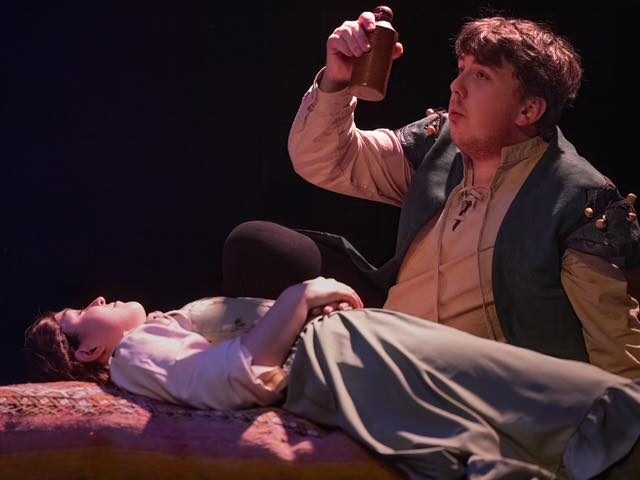
At the centre of the production was Josh Wood as Will Shakespeare, who delivered a convincing portrayal of the struggling playwright suffering from writer’s block. Wood captured both Shakespeare’s wit and vulnerability, moving naturally between comic frustration and poetic passion. His performance developed well throughout the play, particularly as Shakespeare finds inspiration through love, giving the character a believable emotional arc.
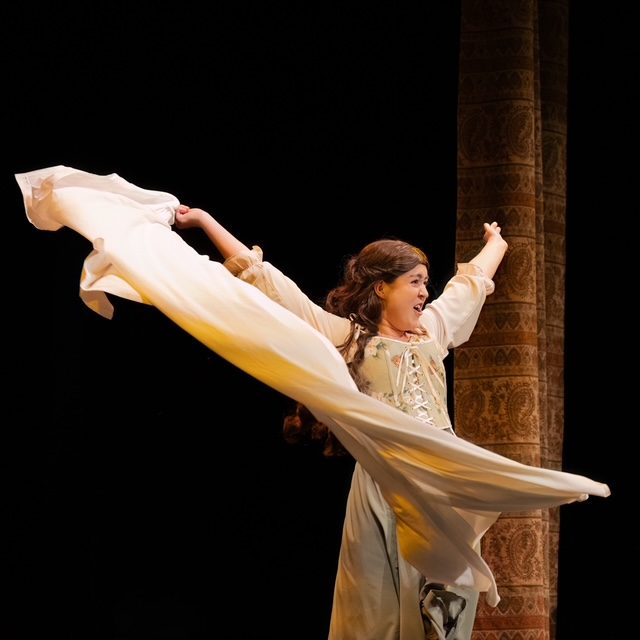
Opposite him, Gemma Dykes as Viola De Lesseps brought warmth and determination to the role. Viola is a character who defies the strict conventions of Elizabethan society in pursuit of her love for theatre, and Dykes conveyed this courage effectively. Her chemistry with Wood helped anchor the romantic heart of the play, especially in the moments when Viola disguises herself to act on stage.
Che Cullen’s portrayal of Christopher Marlowe added both humour and intrigue. Marlowe is often presented as a charismatic and slightly mischievous contemporary of Shakespeare, and Cullen embraced this interpretation, providing witty exchanges and a confident stage presence that helped drive several of the play’s comic moments.
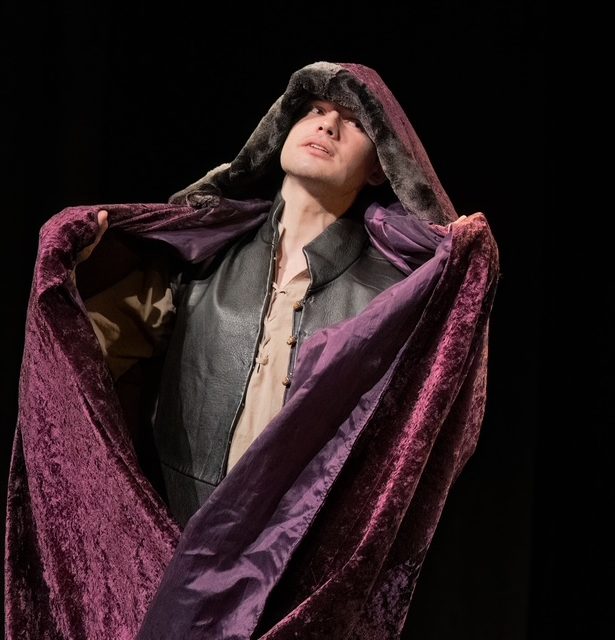
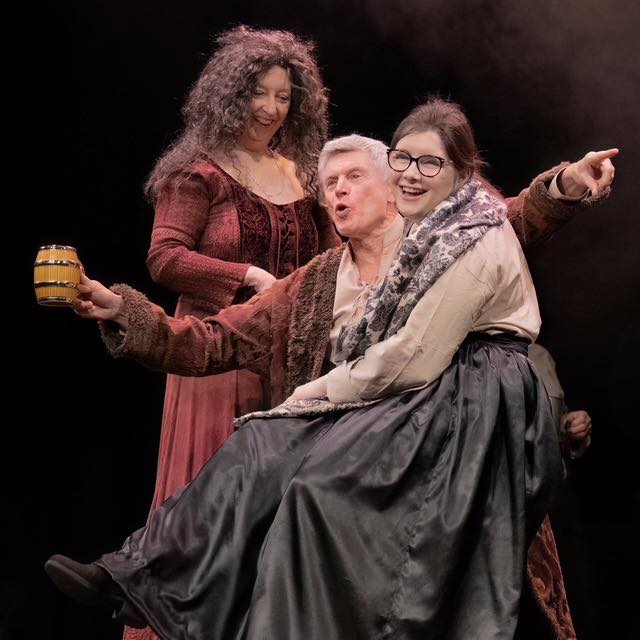
A strong supporting cast helped bring the bustling world of Elizabethan theatre to life. Marie Williams as Henslowe delivered an energetic performance as the anxious theatre owner, capturing the character’s constant concern for finances and productions with excellent comic timing. Trevor Butlin as Hugh Fennyman, the intimidating moneylender, balanced menace with humour.

Barry Prescott took on the dual roles of Richard Burbage and the Boatman, providing versatility and a commanding presence. As Burbage, he embodied the confident actor-manager typical of the era, while his secondary role added a lighter touch to the production. Similarly, Matt Kasprzak’s multiple appearances as Frees, a henchman, and a town guard helped maintain the fast-paced nature of the play and demonstrated strong adaptability.
Authority figures were also well represented. Tom Jenkinson as Edmund Tilney, the Master of the Revels, delivered the character’s strict and often pompous authority convincingly, reinforcing the societal rules that Viola challenges. Meanwhile, Caroline Kay as Queen Elizabeth gave a poised and regal performance, capturing the wit and commanding presence of the monarch, particularly in the climactic scenes where the Queen ultimately judges the power of true love and theatre.
Other members of the ensemble helped create a lively theatrical world. Adam Comer as Lord Wessex portrayed the controlling and arrogant nobleman superbly, creating a strong obstacle for the lovers. Ticki Clark as the Nurse provided humour and warmth and also appeared in multiple roles showing just how versatile her acting is, while Rosabelle Bennet as Ned Alleyn, Megan McWha as Lambert, Adelle Riley-Bell as Wabash, Alice Rowlands as Nol, Kaitlyn Spillets as Webster, and Joan Mason as Peter all contributed to the chaotic and comedic rehearsal scenes that reflect the unpredictable nature of theatre itself.

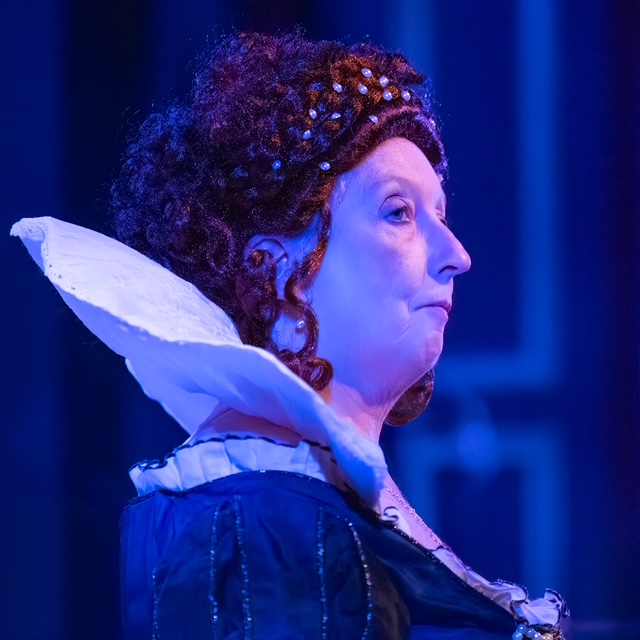
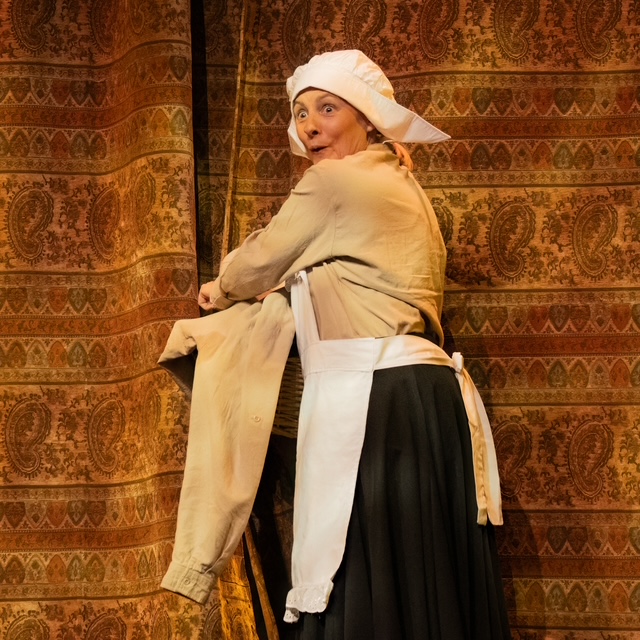
A particularly charming addition to the cast was Jess as Spot the Dog, whose appearance brought a moment of genuine delight for the audience and added to the playful atmosphere of the production.
Beyond the performances, the production made effective use of simple but thoughtful staging. Much of the set relied on the creative arrangement of chairs, which were positioned throughout the performance around the outside of the stage. While minimal, this approach proved highly effective, allowing scenes to transition quickly and keeping the pace of the production lively. The decision to keep much of the cast on stage for large portions of the play also reflected the chaotic energy of an Elizabethan theatre company, with actors constantly observing, reacting, or preparing for their next entrance. This helped create a sense of a living theatrical environment rather than isolated scenes.
One of the most effective staging moments came during one of the final sequences, when the play within the play is performed. By introducing an additional curtain and repositioning the action, the production cleverly shifted the audience’s perspective so that it felt as though they were watching the performance from backstage rather than from the auditorium. This subtle change created a strong theatrical illusion and emphasised the play’s central theme: the magic and unpredictability of live theatre.
The lighting design was similarly simple but used to strong effect. Rather than relying on complex technical effects, the lighting focused on establishing mood and guiding the audience’s attention. Warmer tones helped evoke the atmosphere of candlelit Elizabethan playhouses, while darker and more focused lighting was used to emphasise more intimate or dramatic moments between characters. This restrained approach worked well within the minimal staging, ensuring that lighting complemented rather than overshadowed the action on stage.
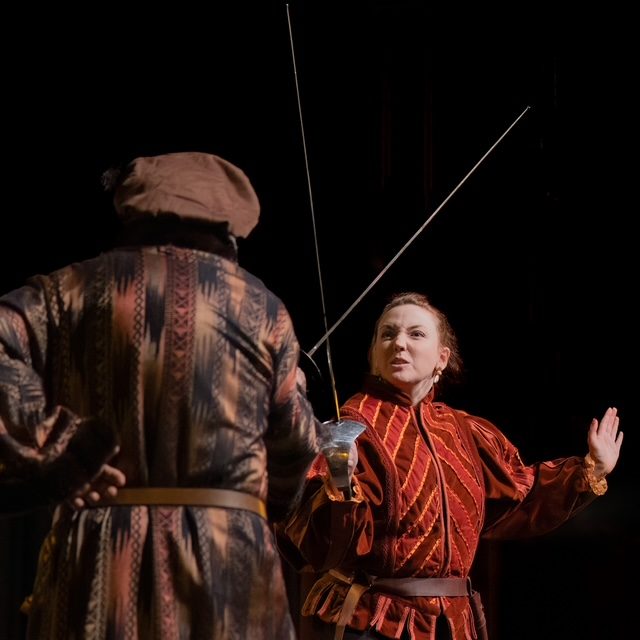
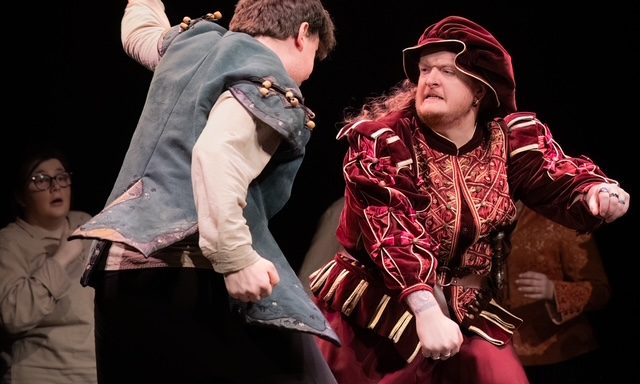
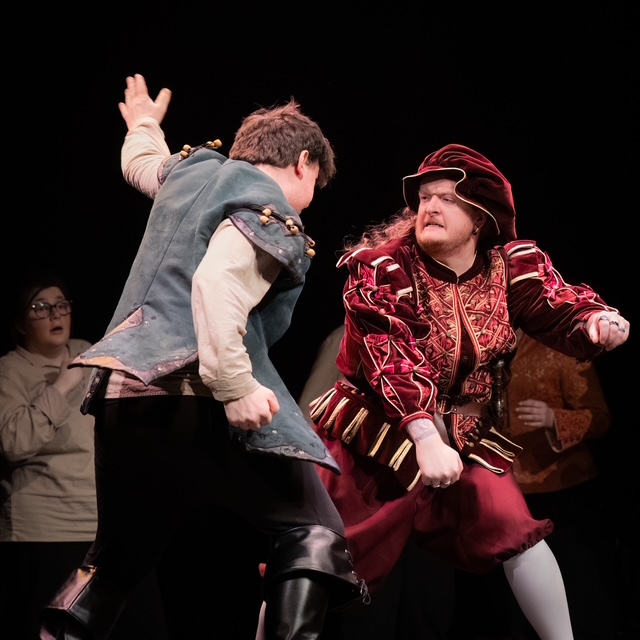
Another notable element of the production was the use of stage combat, which appeared several times throughout the performance. These moments were executed confidently and added excitement and realism to the story, particularly during moments of confrontation or heightened tension. The physicality required for these sequences demonstrated the cast’s versatility and skill, helping to bring energy and spectacle to the production while remaining safe and well-choreographed.
A further highlight of the production was the use of music and song, which added another engaging layer to the performance. Under the leadership of Choir Leader Adelle Riley-Bell, the cast delivered several musical moments that enriched the atmosphere of the show and helped reinforce the sense of community within the theatre troupe. The harmonies were particularly impressive, with the ensemble singing confidently and cohesively. These musical sections not only added texture to the production but also helped evoke the celebratory and communal nature of performance during the Elizabethan era.
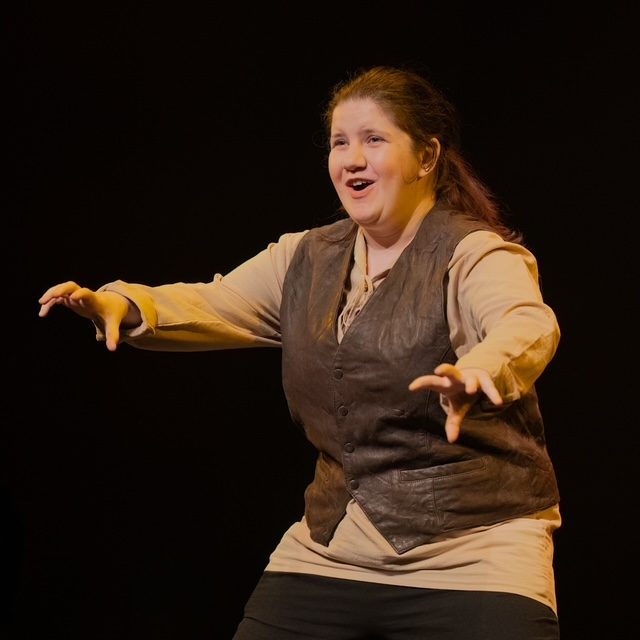
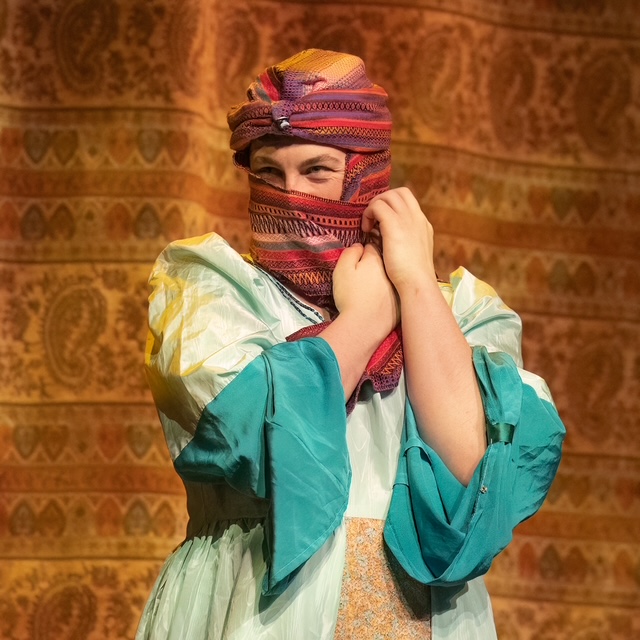
The costume design, thanks to Vikki Bridson-Vice, played a crucial role in bringing the world of the play to life. The costumes were both period-appropriate and visually striking, helping to clearly define characters and their place within Elizabethan society. Rich fabrics and well-tailored garments helped distinguish the nobility from the working theatre company, while also adding authenticity to the overall aesthetic of the production. Attention to detail in the design ensured that each costume felt purposeful and carefully considered, completing the visual identity of the show and immersing the audience fully in the historical setting.
Finally, much credit must go to the directors, Jane Wing and Adam Comer, whose leadership clearly shaped the success of the production. Their direction brought together a large and varied cast with clarity and confidence, ensuring that the story flowed smoothly despite the play’s many moving parts. The casting choices felt thoughtful and well balanced, with each performer contributing effectively to the overall ensemble dynamic. Wing and Comer’s direction also embraced the play’s inherent theatricality, highlighting both the romance and the humour while maintaining a lively pace throughout. Their ability to blend strong performances, creative staging, and engaging ensemble work resulted in a production that felt cohesive, energetic, and thoroughly entertaining.
Overall, the Gladstone Theatre’s production of Shakespeare in Love successfully captured the humour, romance, and theatrical excitement that make the story so beloved. With a committed cast, lively performances, and a clear appreciation for the world of Elizabethan theatre, the production offered an entertaining evening that celebrated both Shakespeare and the timeless joy of live performance well done bebington Dramatic Society on another great production.
Reviewer: Matthew Maney - AMT Productions
Date: 7th March 2026
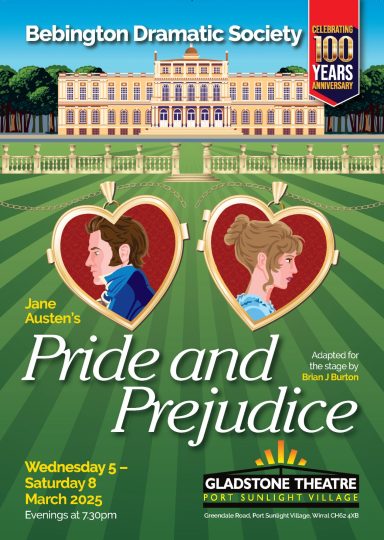
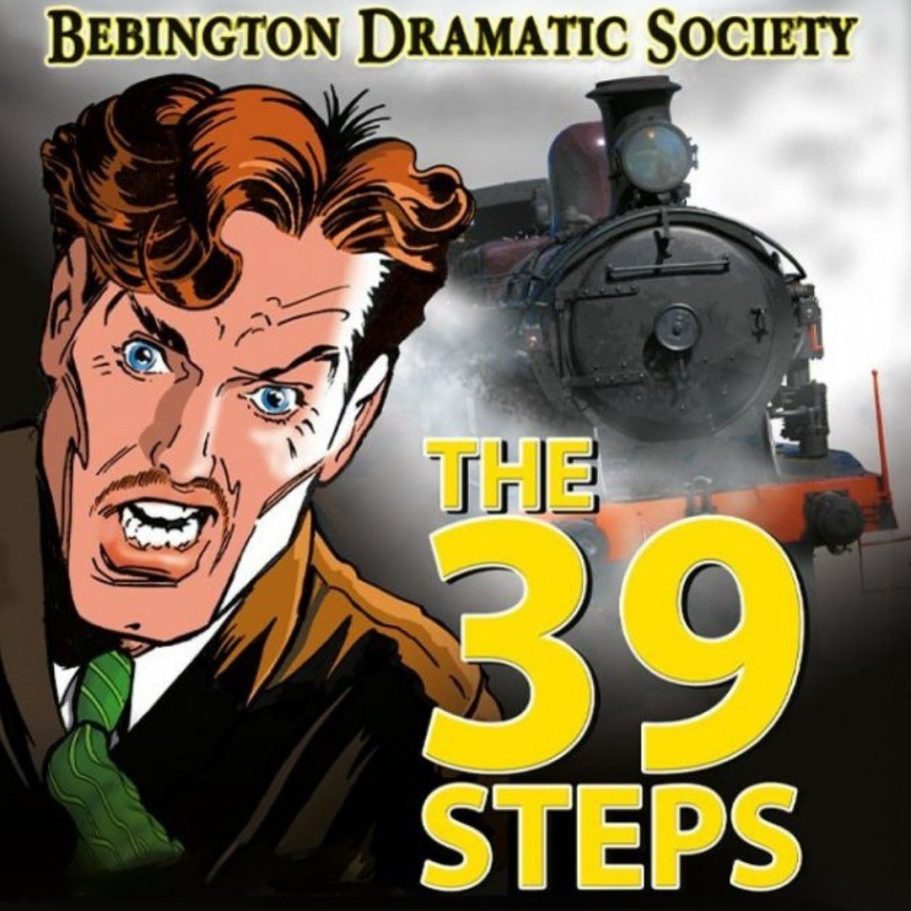
If you want to see Bebington Dramatic Society's next production ‘Blue Stockings’ - June 10th -13th June 2026 at The Gladstone Theatre. Please follow the link below to book your tickets.







Our Process
AMTP partners with a selected group of Producers, Directors & theatre critics to bring you reviews of local theatre shows.
Meet Our Reviewers
Bwalya Mutale-Kibaris

Bwalya Mutale-Kibaris has always enjoyed writing, whether it be fictional stories, the first 10 pages of a script or book, or writing reviews for random brochures back in her university days! Bwalya loves putting words together to create something that is hopefully informative, engaging or at the very least, easy to read and understand! She is grateful to AMT Productions for giving her the opportunity to write a review for a play in 2024. This was a rewarding learning experience that Bwalya will take with her to all future ventures as she plans to fill much of her time writing with the hope of leaving readers suitably entertained.
Rebecca Topping

Rebecca Topping studied Drama at Queen Mary University of London and has been writing and producing plays professionally for over 10 years. She has experience of performing and directing on London’s West End and is currently teaching Comedy and Drama for the Pauline Quirke Academy of Performing Arts and working creatively in communities for a charity in Birkenhead. With sell out runs of comedy shows in London, Liverpool and Edinburgh, she is no stranger to the jokes and gags needed to have an audience in stitches.
Abigail Bradbury

Abigail is a Choreographer, Director and Movement Director for professional and amateur large-scale musicals, plays, films and pantomimes across the UK. Abigail has worked extensively within the industry, appearing in her first TV series at the tender age of 6. Abigail HAS Radio, Film and television credits with BBC, ITV, BBC Merseyside Radio and Heart Radio. In addition to her radio and television credits, Abigail’s professional performing career also includes leading roles in ‘Peter Pan’, ‘Pied Piper’, ‘Her Benny’, ‘Christmas Carol’ and ‘David Copperfield’, in a variety of touring theatres across the UK, AND HAS recently performed in ‘Shrek the Musical’, ‘Chitty Chitty Bang Bang’ and ‘The Sound of Music’ at the Liverpool Empire.
Abigail has always had a passion for teaching and sharing her knowledge and skills within the theatre industry.

Matthew is a Director of AMTP LTD and has also starred in multiple TV & film appearances, Matthew has been involved in large scale productions of both theatre and fashion events throughout his life and has a passion for the arts.